Step 1 of 5
Walkthrough and written scope
We review the cook line, prep, dish, storage, and floor plan to confirm priorities, access limitations, and the areas that need recurring attention.
Serving Fort Worth, Texas & surrounding areas
Mon–Fri 8am–6pm · Sat 9am–2pm
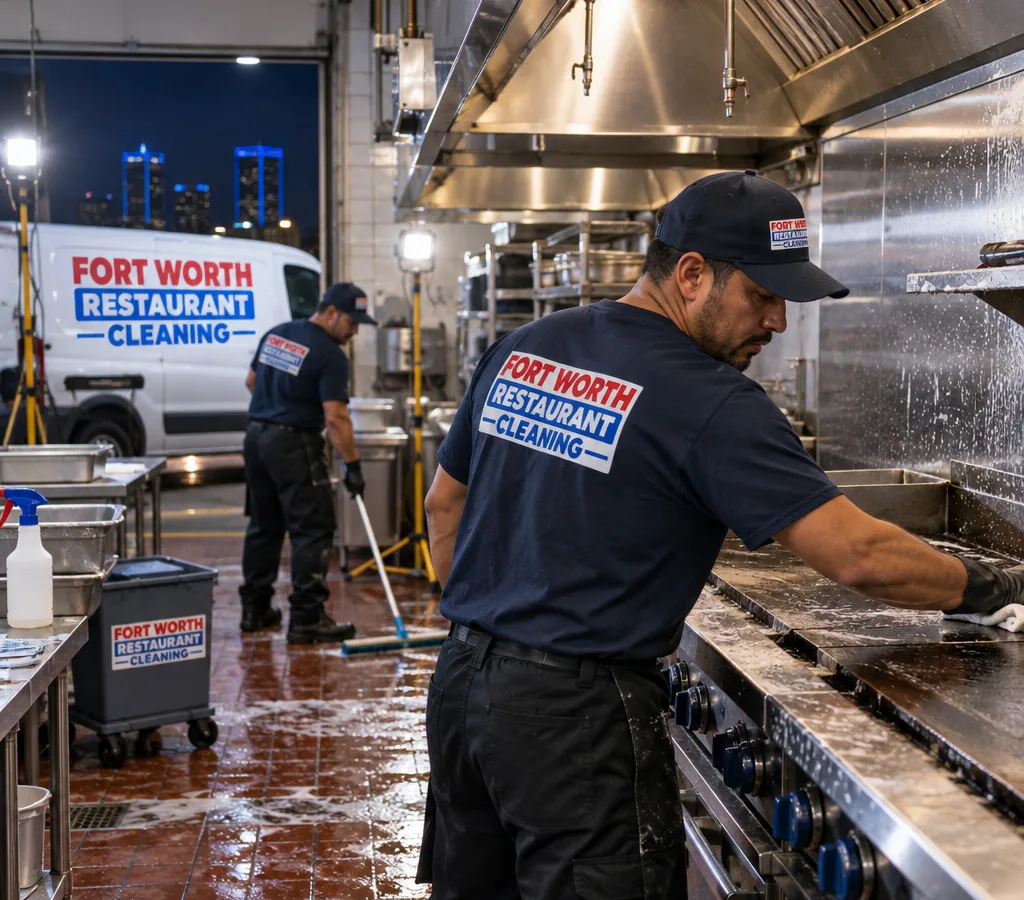
Keep your line, prep, and dish areas inspection-ready with detailed degreasing and sanitation that fits real restaurant hours.
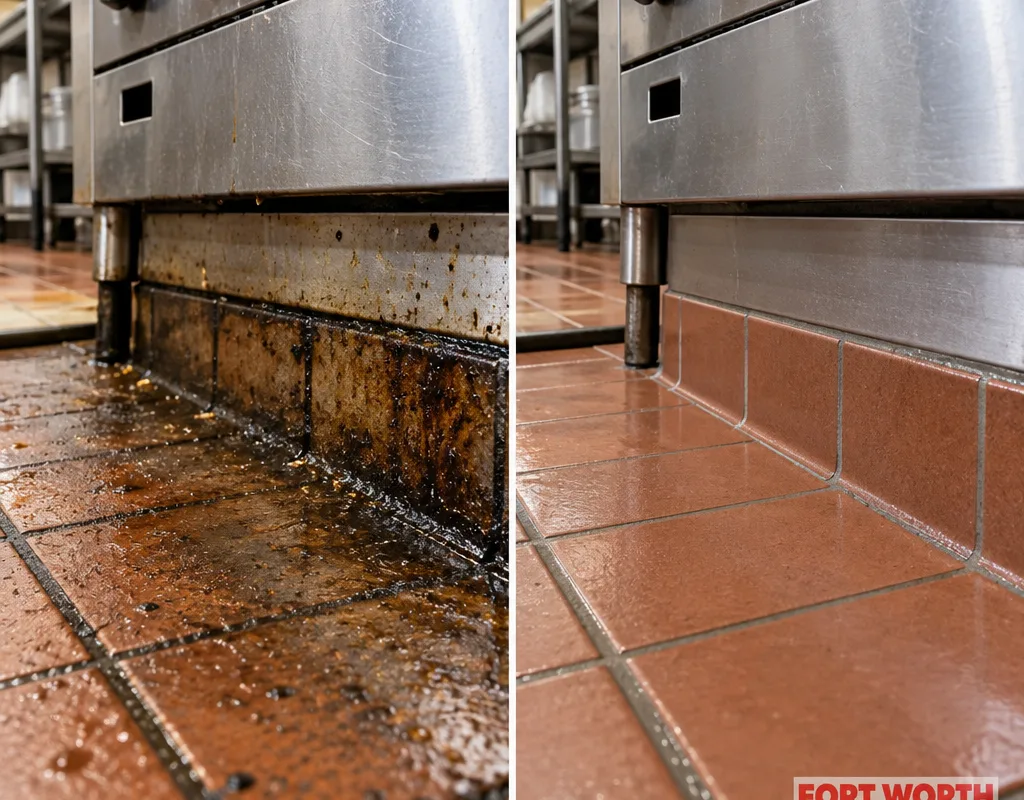
Commercial Kitchen Cleaning Arlington work is about controlling grease, heat, food soils, and moisture in the places that get missed during a shift. When buildup sits behind equipment, under the cook line, around the dish machine, and along cove base and floor drains, it turns into odors, slip risk, pest pressure, and inspection headaches.
Fort Worth Restaurant Cleaning provides commercial kitchen cleaning for Arlington restaurants that need steady, repeatable results. We focus on the back-of-house: the cook line, prep areas, dish area, and high-touch surfaces that affect food safety and day-to-day operations. You get a written scope, clear scheduling, and a crew that understands what a working kitchen looks like at close.
Arlington's dining corridors along Interstate 20 and the activity around Arlington Highlands can mean late nights, higher volume, and faster grease accumulation. We build the cleaning plan around your service style, your hours, and the areas that actually drive risk, not a generic checklist.
Cook line surfaces, sides and fronts of equipment, backsplash areas, wall splatter zones, and the floor perimeter where grease creeps under mats and into joints.
Pull-and-clean access is planned in advance. When equipment cannot be moved, we detail reachable edges and propose practical next steps for deeper access.
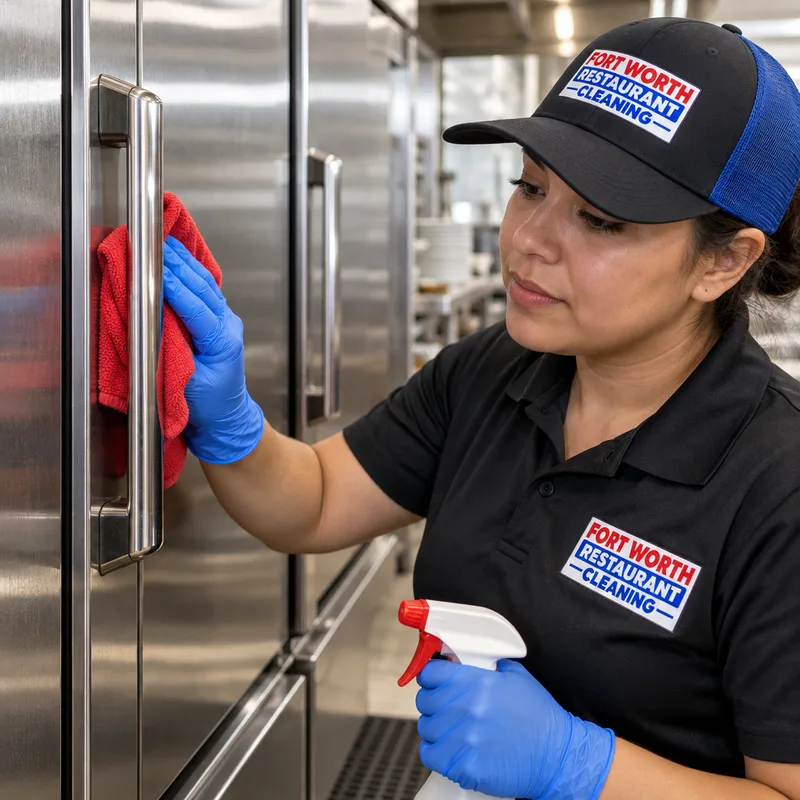
We follow manufacturer-friendly methods for stainless and plastics, and we avoid harsh chemistry where it can damage finishes or create residue problems.
Grease and scale collect fast around dish machines, mop sinks, and floor drains. We focus on the buildup patterns that cause odor and slippery floors.
Spills and sticky soils near dumpsters, grease bins, and dry storage get addressed so pests have fewer reasons to show up.
A defined scope, notes on trouble spots, and a schedule that fits your busiest days. The goal is predictable conditions week to week.
Restaurant Cleaning Arlington is easiest to manage when the cleaning plan matches how the kitchen actually runs. A high-volume grill line has different buildup than a bakery prep room, and a busy dish pit needs different attention than a small bar kitchen.
We start by identifying grease sources and soil paths: where cooking vapors settle, where staff traffic carries residue, and where moisture stays trapped. Then we choose methods that remove soils without creating new problems, like slick residue on floors or chemical odor in a tight back-of-house.
You can expect:
If your operation also needs front-of-house upkeep, Fort Worth Restaurant Cleaning offers broader professional restaurant cleaning as well, but this service is built specifically around back-of-house kitchen conditions.
Step 1 of 5
We review the cook line, prep, dish, storage, and floor plan to confirm priorities, access limitations, and the areas that need recurring attention.
Step 2 of 5
We stage tools and containment, protect sensitive areas as needed, and apply pre-treatment to heavy grease so chemistry can do its job before scrubbing.
Step 3 of 5
We work top-down and line-by-line: equipment exteriors, adjacent walls, ledges, undersides, and the floor perimeter where buildup accumulates.
Step 4 of 5
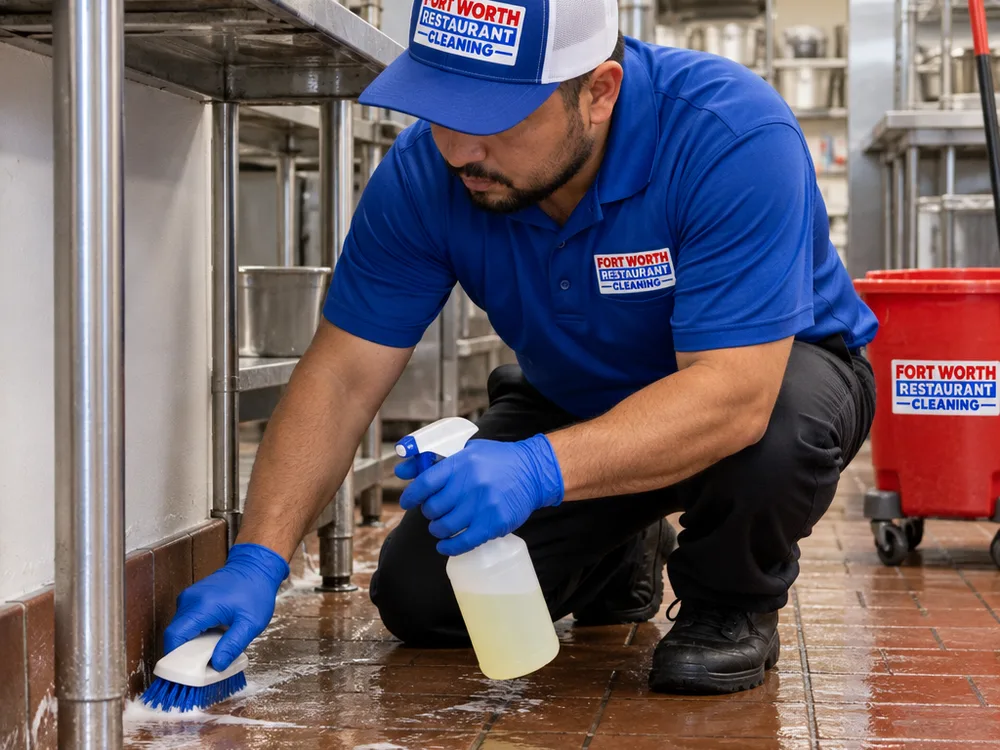
We target slip zones and odor zones: under-mat areas, grout lines, cove base, and drain surroundings. These spots drive many recurring complaints.
Step 5 of 5
We remove residues, reset the workspace, and note any access needs or maintenance items so the next visit stays efficient and consistent.
Commercial kitchen cleaning in Arlington typically runs about $300 to $900 per visit for smaller kitchens, while large or heavy-grease back-of-house cleanings often land around $900 to $2,500+. Pricing depends on kitchen size, grease load, how much equipment must be moved, floor condition (grout, drains, slip-resistant coatings), and whether work happens after-hours.
The most accurate price comes from a walkthrough so we can confirm access points, trouble areas, and the cleaning frequency that keeps things stable.
Most Arlington kitchens do best with a recurring schedule (weekly, biweekly, or monthly) based on grease load and volume. A fry-heavy menu and late-night service usually require more frequent degreasing around the cook line and floors, while lower-grease concepts may maintain conditions with less frequent deep cleaning plus daily staff checklists. We can recommend a cadence after a walkthrough so you are not overpaying or falling behind.
Yes, when access is safe and approved, we include behind-and-under cleaning as part of the scope. Some equipment needs a planned pull-out, shutoff coordination, or extra labor time, so we confirm in advance what can be moved, what stays in place, and what areas will be detailed at the edges until a deeper pull can be scheduled.
Yes, after-hours cleaning is common for restaurant kitchens because it keeps the line available during service. The key is agreeing on a start time, the areas that must be dry and reset by open, and any equipment cool-down needs so degreasing and floor work can be done safely.
Commercial kitchen cleaning focuses on the back-of-house surfaces you work around every day: equipment exteriors, walls, floors, corners, and dish/prep areas. Hood cleaning focuses on the exhaust hood, filters, ductwork, and fan system. Many restaurants schedule both, but they are different scopes with different access requirements and documentation.
A quick pre-stage makes the visit more effective: label any items that must not be moved, clear loose personal items from shelves, and let us know if any equipment is out of service or has electrical or gas limitations. If you want specific areas addressed, like a persistent odor near the dish pit, flag them at the start so the scope matches your priorities.
Yes, one-time deep cleans are common ahead of an inspection, after a remodel, or during a takeover when you need a reset on grease and food soils. For Arlington locations, we can focus on the high-risk zones inspectors and operators notice fast: cook line buildup, dish area scale and odor, corners and cove base, and floor slip conditions.
If your kitchen is clean but never feels fully under control, a written scope and steady schedule usually fix it faster than occasional emergency deep cleans.
Call for a Free QuoteTell us your restaurant type, hours, and problem areas in Arlington. We will map a clear scope, set expectations for access and timing, and quote the schedule that keeps your back-of-house restaurant-ready.