Step 1 of 5
Walkthrough and scope
We identify floor types, the worst grease lanes, and any areas that need access. You get a written scope that matches how your kitchen operates.
Serving Fort Worth, Texas & surrounding areas
Mon–Fri 8am–6pm · Sat 9am–2pm
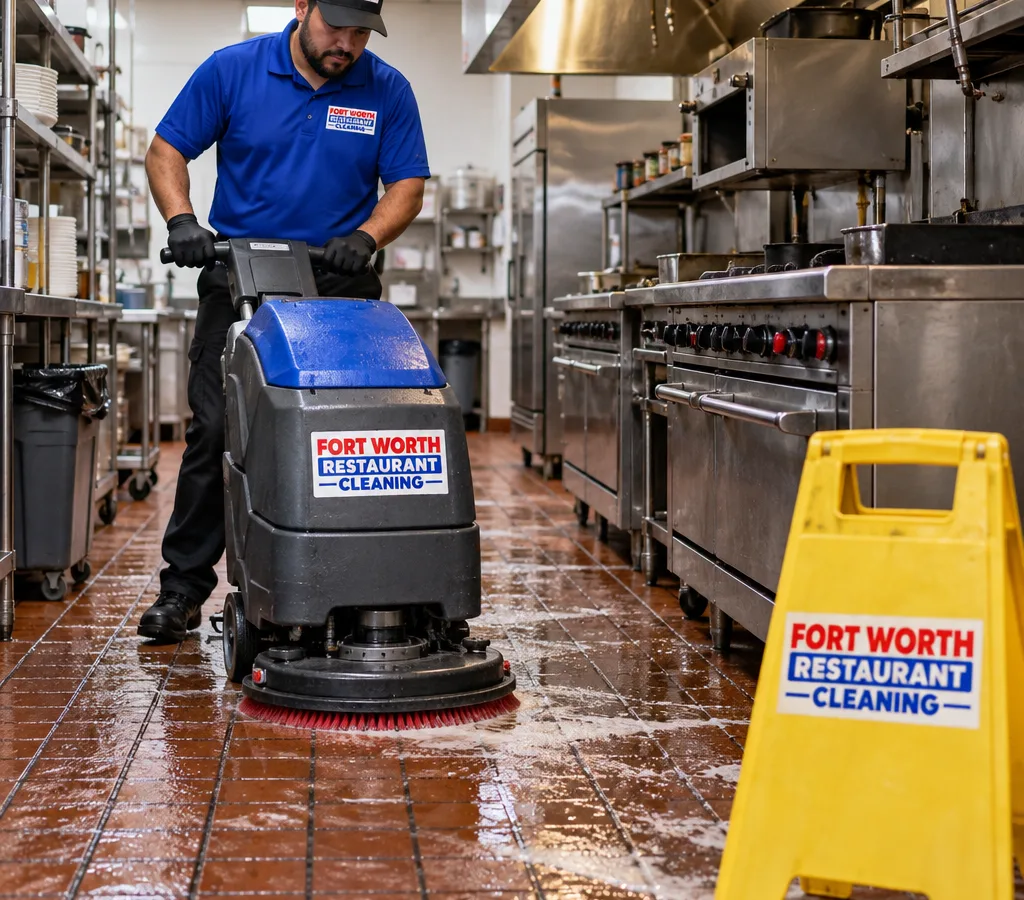
Restaurant kitchen floors collect grease fast. We deep-clean tile, grout, and safety surfaces so your back-of-house stays cleaner, less slick, and ready for service.
Commercial Kitchen Floor Cleaning is different from cleaning dining-room floors. In a working kitchen, grease aerosol settles into pores, grout lines, and textured finishes. Add food debris, heat, and constant traffic and you end up with darkened grout, slippery lanes, and residue that routine mopping leaves behind.
Fort Worth Restaurant Cleaning provides Commercial Floor Cleaning in Fort Worth for restaurant kitchens that need a true reset. We focus on the back-of-house areas that take the most abuse: the cook line lanes, dish and prep zones, walk paths between coolers and storage, and entry points where grit gets tracked in.
You get a clear scope, a realistic plan around your service hours, and a floor that is scrubbed and rinsed the right way so soil is removed instead of spread around. If you are coordinating multiple back-of-house needs, our team also handles broader restaurant cleaning so you can align schedules and reduce downtime.
Restaurant Floor Cleaning Services should do more than make the surface look better for a day. The goal is to remove grease and embedded soil from the texture and from grout, then leave the floor safe to walk on and easy for your staff to maintain.
Typical Commercial Kitchen Floor Cleaning scope includes:
You will always know what areas are included, what needs access—such as mats moved or light equipment shifted—and what the floor should look like when it is fully dry.
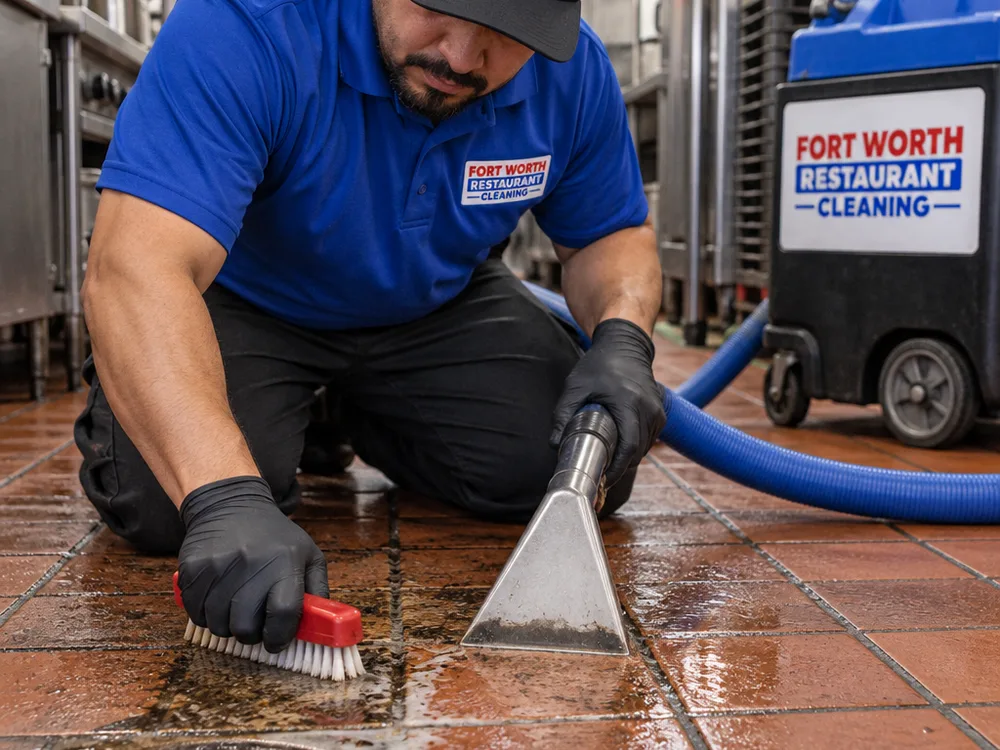
Even when tile looks acceptable, grout holds oil and soil. Targeted Restaurant Grout Cleaning removes the dark lines that keep coming back after mopping.
Many commercial kitchen floors are textured for traction. That texture traps grime and requires agitation plus recovery to clean thoroughly.
Paths between the line, dish area, and storage get constant foot traffic. We focus on those lanes so the floor is safer where people actually walk.
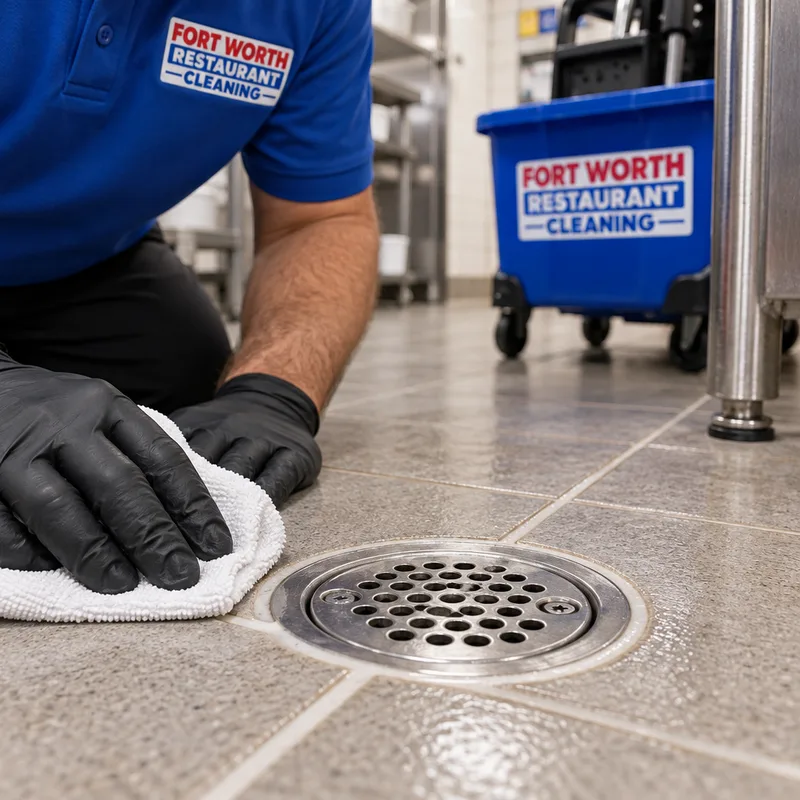
Floor drains and edges collect buildup. We hand-detail around drains, corners, and transitions where machines miss.
Restaurant Floor Cleaning Fort Worth work is planned around your operating hours so floors have time to dry before staff returns to the line.
Step 1 of 5
We identify floor types, the worst grease lanes, and any areas that need access. You get a written scope that matches how your kitchen operates.
Step 2 of 5
We set wet floor signage, clear light obstacles as agreed, and pre-sweep to remove debris that would otherwise turn into sludge during scrubbing.
Step 3 of 5
We apply degreaser and allow proper dwell time. This is where Restaurant Floor Degreasing actually works, instead of being a quick spray-and-mop.
Step 4 of 5
We scrub with commercial equipment matched to the floor, then detail along edges, corners, and around drains. Tile and grout are scrubbed until the soil releases.
Step 5 of 5
We rinse and extract the dirty solution, then verify traction and appearance as the floor starts drying. We note damaged grout or worn areas so you can plan repairs.
Commercial kitchen floor cleaning in Fort Worth typically ranges from about $0.35 to $0.85 per square foot, with most restaurant kitchens landing around $250 to $900 per visit depending on size and buildup. Small prep and dish areas are usually at the low end, while large, heavily greased cook-line lanes with tight edges cost more.
Final pricing changes with square footage, grout condition, floor texture, how much hand detail is needed, and access—what can be moved and what cannot. The exact cost is confirmed after a walkthrough so the scope matches your kitchen layout and operating hours.
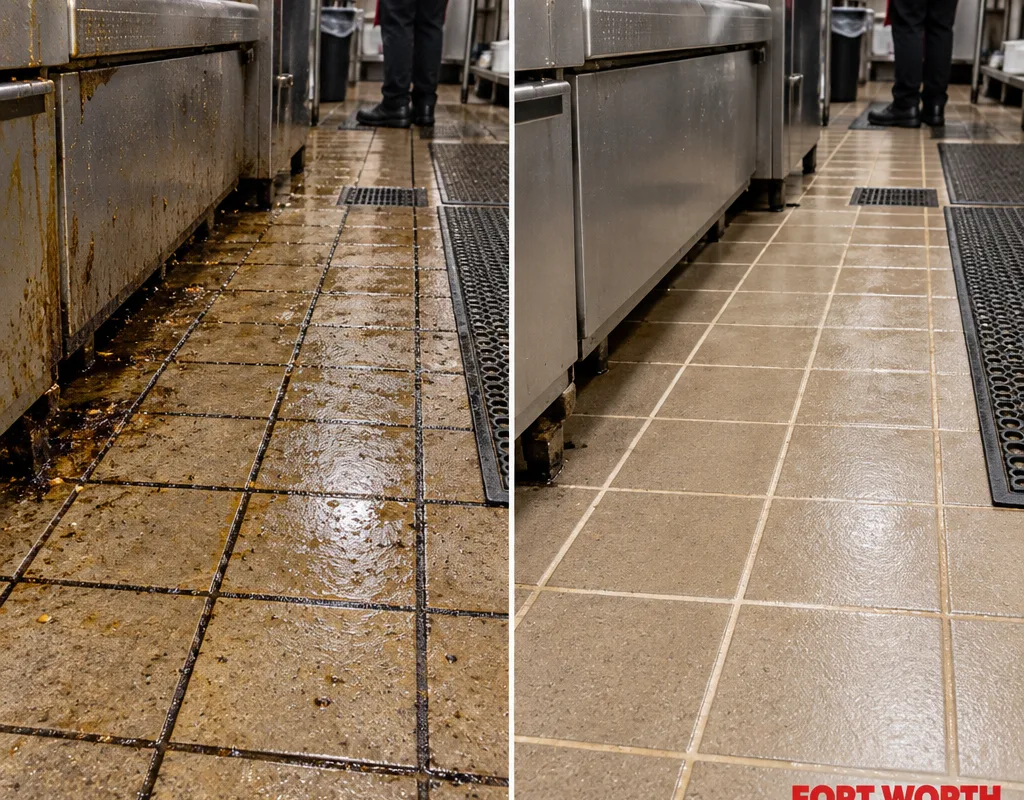
Most busy kitchens schedule deep Restaurant Floor Degreasing every 2 to 6 weeks, while lighter-use kitchens often do it monthly or quarterly. The right interval depends on fryer and grill volume, how quickly grout darkens, and whether staff mopping is keeping traction up between visits.
We include Restaurant Grout Cleaning as part of Commercial Kitchen Floor Cleaning when the floor is tile with grout lines. Grout is where grease usually holds on, so we agitate it directly, then rinse and extract so the released soil is removed from the floor.
Yes. Restaurant Tile Cleaning is done with brushes and pads selected for the surface texture, plus chemistry designed to break down grease. We avoid overly aggressive abrasives that can prematurely wear a surface, and we adjust the method after inspecting the floor.
Usually not, but you do need a clear window for the areas being cleaned so the floor can be scrubbed, rinsed, and left to dry. Many Fort Worth operators schedule kitchen floor work after close or during off-hours, and we plan the sequence to match your layout and access.
Most jobs take 1 to 4 hours on-site, depending on square footage, grease level, and edge detail needs around equipment. We can give a tighter time estimate after a walkthrough of your cook line, dish area, and main traffic lanes.
We typically ask that loose items are picked up, floor mats are removed, and agreed-upon areas have access for scrubbing and recovery. If any light equipment can be shifted safely by your team, that helps us clean edges and corners where grease builds up fastest.
Yes. Our shop is at 2100 N Main St, Suite 4, Fort Worth, TX 76164, so we regularly schedule Restaurant Floor Cleaning Fort Worth work for kitchens around north Fort Worth, including near the Stockyards area, where back-of-house floors see heavy weekend traffic and fast grease buildup.
Tell us your kitchen floor type, your worst problem areas, and your preferred service window. We will recommend a cleaning approach, confirm access needs, and schedule Commercial Kitchen Floor Cleaning that fits your operations.